Home / AI scraping API pricing
AI scraping API pricing
100,000 extractions a month: from $90.00 on ScrapingDog, across 31 AI extraction APIs.
Your job
More: other kinds of API
The five lowest bills for this job
ScrapingDog
$90.00a month · Standard
Lowest bill for this job.
- Per 1,000 extractions$0.90
WebScraping.AI
$99.00a month · Plus
Same $99.00 as ScrapingBee, with more headroom (to 166,666 extractions).
- Per 1,000 extractions$0.99
ScrapingBee
$99.00a month · Startup
Free tier: 1,000 credits once, no card.
- Per 1,000 extractions$0.99
ScrapingBot
$99.99a month · Startup
Room to grow to 183,333 extractions on the same plan.
- Per 1,000 extractions$1.00
Valyu
$159.00a month · Comfortably Pro
$69.00 a month more than ScrapingDog, on Comfortably Pro.
- Per 1,000 extractions$1.59
What the shortlist costs as the job grows
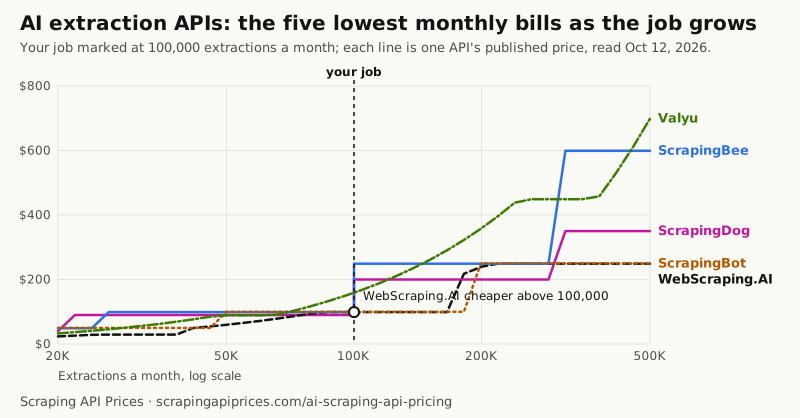
The monthly bill at every volume from 20,000 to 500,000 extractions, with your job marked. ScrapingDog is cheaper between about 79,000 and 100,000 extractions; below and above that band, WebScraping.AI is. A step is a plan boundary.
- ScrapingDog
- WebScraping.AI
- ScrapingBee
- ScrapingBot
- Valyu
The bills behind the curve
- ScrapingDog: 20,000: $40.00 · 50,000: $90.00 · 100,000: $90.00 · 200,000: $200.00 · 500,000: $350.00
- WebScraping.AI: 20,000: $23.60 · 50,000: $59.60 · 100,000: $99.00 · 200,000: $239.60 · 500,000: $249.00
- ScrapingBee: 20,000: $49.00 · 50,000: $99.00 · 100,000: $99.00 · 200,000: $249.00 · 500,000: $599.00
- ScrapingBot: 20,000: $49.99 · 50,000: $99.99 · 100,000: $99.99 · 200,000: $249.99 · 500,000: $249.99
- Valyu: 20,000: $33.00 · 50,000: $89.00 · 100,000: $159.00 · 200,000: $359.00 · 500,000: $699.00
All 31 AI extraction APIs, priced for this job
Sorted by monthly bill; a tie goes to the plan with more room to grow. Bills that rest on an assumption, prepaid packs and published minimums follow, then every product this job cannot price, each with the reason.
| Product | Monthly bill | Per 1,000 extractions | Free tier | Room to grow | Checked |
|---|---|---|---|---|---|
| ScrapingDogOfficial pricing ↗ | $90.00Standard | $0.90 | 100 credits once | at the limit | Oct 12, 2026 |
| WebScraping.AIOfficial pricing ↗ | $99.00Plus | $0.99 | 2,000 credits a month, no card | to 166,666 | Oct 12, 2026 |
| ScrapingBeeOfficial pricing ↗ | $99.00Startup | $0.99 | 1,000 credits once, no card | at the limit | Oct 12, 2026 |
| ScrapingBotOfficial pricing ↗ | $99.99Startup | $1.00 | 100 credits once | to 183,333 | Oct 12, 2026 |
| ValyuOfficial pricing ↗ | $159.00Comfortably Pro | $1.59 | 10 credits once, no card | at the limit | Oct 12, 2026 |
| ScrapeOpsOfficial pricing ↗ | $249.003,500,000 credits | $2.49 | 1,000 credits once | at the limit | Oct 12, 2026 |
| DiffbotOfficial pricing ↗ | $299.00Startup | $2.99 | size not published, renewal not published | to 250,000 | Oct 12, 2026 |
| FirecrawlOfficial pricing ↗ | $399.00Growth | $3.99 | 1,000 credits a month, no card | at the limit | Oct 12, 2026 |
| BrowserbaseOfficial pricing ↗ | $416.00Developer — Extract | $4.16 | 1 browser hour a month | at the limit | Oct 12, 2026 |
| Search1APIOfficial pricing ↗ | $499.00Enterprise | $4.99 | size not published, renewal not published | at the limit | Oct 12, 2026 |
| ScrapeGraphAIOfficial pricing ↗ | $500.00Pro | $5.00 | 500 credits once | to 150,000 | Oct 12, 2026 |
| AgentQLOfficial pricing ↗ | $1,449.00Professional | $14.49 | 300 requests once, no card | at the limit | Oct 12, 2026 |
| BrowsableOfficial pricing ↗ | $1,999.00Business | $19.99 | 100 credits once | at the limit | Oct 12, 2026 |
| Anchor BrowserOfficial pricing ↗ | $10,000.00Starter | $100.00 | 5 credits a month, no card | at the limit | Oct 12, 2026 |
| A vendor sells this volume by quote, bills a unit this job does not determine, or publishes no rate for part of the job. Each row says which. | |||||
| Bright Data Web Unlocker and Web Scraper APIOfficial pricing ↗ | No public price for this jobNo published price for AI extraction | not published | 5,000 requests a month, no card | not published | Oct 12, 2026 |
| Browse AIOfficial pricing ↗ | No public price for this jobBrowse AI bills robot tasks according to captured rows, text, screenshots and premium-site multipliers. A count of extraction operations does not supply those quantities, so it does not establish a complete bill. | not published | 50 credits a month, no card | not published | Oct 12, 2026 |
| Browser Use CloudOfficial pricing ↗ | No public price for this jobNo published price for AI extraction | not published | $1 of usage once, no card | not published | Oct 12, 2026 |
| Cloudflare Browser RenderingOfficial pricing ↗ | No public price for this jobNo published price for AI extraction | not published | size not published, renewal not published | not published | Oct 12, 2026 |
| DesearchOfficial pricing ↗ | No public price for this jobNo published price for AI extraction | not published | $5 of usage once | not published | Oct 12, 2026 |
| HasDataOfficial pricing ↗ | No public price for this jobNo published price for AI extraction | not published | 1,000 credits a month, no card | not published | Oct 12, 2026 |
| HyperbrowserOfficial pricing ↗ | No public price for this jobHyperbrowser charges 0.03 credits per output token for AI extraction. This workload gives an operation count but no output-token count, so its bill cannot be completed. | not published | size not published, renewal not published | not published | Oct 12, 2026 |
| Jina AI Reader and Search Foundation APIsOfficial pricing ↗ | No public price for this jobNo published price for AI extraction | not published | 10,000,000 tokens once, no card | not published | Oct 12, 2026 |
| KadoaOfficial pricing ↗ | No public price for this jobKadoa publishes consumption-based plan descriptions without a billing unit or rate. Its public terms do not establish a bill for 100,000 extraction operations. | not published | size not published, renewal not published | not published | Sep 2, 2026 |
| NimbleOfficial pricing ↗ | No public price for this jobNo published price for AI extraction | not published | 5,000 pages once, no card | not published | Oct 12, 2026 |
| OlostepOfficial pricing ↗ | No public price for this jobThe Olostep pricing page checked on October 5, 2026 states no credit cost for Answers or extraction, so the published credit allowance cannot establish this extraction bill. | not published | 500 requests once | not published | Oct 12, 2026 |
| Scrape.doOfficial pricing ↗ | No public price for this jobNo published price for AI extraction | not published | 1,000 credits, renewal not published, no card | not published | Oct 12, 2026 |
| ScrapflyOfficial pricing ↗ | No public price for this jobNo published price for AI extraction | not published | 1,000 credits once, no card | not published | Oct 12, 2026 |
| ScrapingAntOfficial pricing ↗ | No public price for this jobNo published price for AI extraction | not published | 10,000 credits a month, no card | not published | Oct 12, 2026 |
| Spider.cloudOfficial pricing ↗ | No public price for this jobSpider bills by GB transferred and CPU time, which a page count doesn't tell us, and its Unlimited plan sells concurrency without saying how long a request takes, so we can't price this job. | not published | size not published, renewal not published | not published | Oct 12, 2026 |
| ThunderbitOfficial pricing ↗ | No public price for this jobThe Open API sells its page units by the year, all upfront, and the extension's credits count output rows, so a monthly bill for a page job cannot be calculated from these plans. | not published | 6 pages a month | not published | Oct 11, 2026 |
| Zyte APIOfficial pricing ↗ | No public price for this jobZyte's automatic extraction adds $0.27 to $1.07 per 1,000 for each data type on top of the website's tier price for the request, and an extraction count does not say which data types or which tier, so this job has no single Zyte bill. | not published | $5 of usage once | not published | Oct 12, 2026 |
Leaving one of these APIs? Its alternatives page, listed on the compare page, names who is cheaper for the same job and what a switch gives up; the head-to-head pages set two side by side.
What an AI extraction API is
An AI extraction API turns web content or a browser state into a requested schema, answer, table, markdown representation, or agent-ready object. The defining job is transformation into useful structure, not merely downloading the source page. Some products accept a URL and perform retrieval as part of the call, while others operate on content, tasks, robots, workflows, or browser sessions. Firecrawl documents separate extraction approaches and token-sensitive extraction, while Diffbot describes extraction and crawl operations under credits. (Firecrawl extraction guide, checked Jul 26, 2026; Diffbot pricing, checked Jul 26, 2026.)
The closest neighbour is a scraping API. A scraping API’s primary contract is page retrieval: give it a URL and receive received or rendered content. AI extraction adds semantic transformation into fields or answers. A product that performs both jobs may expose one combined credit weight, two separate meters, or a plan allowance that leaves the combination unclear. ScrapingBee documents extraction alongside its scraping plans, and Zyte API publishes page retrieval plus extraction and token add-ons. (ScrapingBee pricing, checked Jul 26, 2026; Zyte API pricing, checked Jul 26, 2026.)
A cloud browser provides a controllable session, while AI extraction interprets what the session or page contains. A web search API finds relevant resources, while extraction turns located resources into a schema or answer. Agent products can combine browsing, search, and extraction in one workflow, but that does not make browser time, search calls, model tokens, and completed tasks the same billing unit. Browserbase publishes separate browser, Search, Fetch, and Extract allowances, and Browser Use combines browser time, traffic and model-token costs. (Browserbase pricing, checked Jul 25, 2026; Browser Use pricing, checked Oct 5, 2026.)
What this category bills on
Page and request meters are the simplest form. A vendor can charge one extraction request or apply an extraction credit multiplier to each received page. Some products charge per completed task, robot action, captured row, screenshot, crawl page, or monitoring run. Browse AI, for example, defines robot-task consumption through captured rows, screenshots, detail pages, and premium-site rules rather than a universal page request. (Browse AI pricing, checked Jul 26, 2026; ScrapeGraphAI, checked Jul 26, 2026.)
Token meters make input size, output size, schema complexity, and model use part of the bill. Browser-time and compute meters make workflow duration or resources relevant. Hybrid products can charge retrieval, proxy traffic, browser time, and extraction separately, so a published extraction unit is not automatically an all-in rendered-page unit. Firecrawl documents token-sensitive extraction and separate browser-minute consumption, while Jina records Reader output tokens and Search request tokens. (Firecrawl pricing, checked Jul 26, 2026; Firecrawl browser documentation, checked Jul 26, 2026; Jina AI Reader, checked Jul 25, 2026.)
The comparison workload
The table combines one JavaScript-rendered page retrieval with one AI extraction operation and shows every product carrying ai-extraction in the dataset. A row is assumption-free only when the public record supplies the meters required for both parts. If one modifier is absent, the model provisionally treats it as included and marks the row as assumption-dependent. Products sold by task, compute, browser time, token, workflow, or an unpublished contract remain visible without an invented page billing unit. (Scraping API Prices methodology, checked Jul 26, 2026.)
Rows are ordered by evidence state before bill size: assumption-free calculations, assumption-dependent calculations, published lower bounds, quote-required rows, and rows whose public meter does not fit the workload. Affiliate data does not affect inclusion or order. An assumption-marked row is a question to resolve with the vendor, not evidence for a cheapest claim. (Scraping API Prices methodology, checked Jul 26, 2026.)
What can change the bill
Schema size, input and output tokens, model selection, crawl depth, browser duration, proxy route, retries, screenshots, monitoring cadence, and human review can change total consumption or add a second meter. A workflow that extracts from several pages should count retrieval and extraction for every page unless the contract explicitly defines a different bundle. A task-based product should be budgeted from the vendor’s task definition instead of being forced into a page comparison. (Firecrawl extraction guide, checked Jul 26, 2026; Anchor Browser, checked Jul 25, 2026; Browse AI pricing, checked Jul 26, 2026.)
Notes on priced rows
- ScrapeOps charges 10 credits for a JavaScript-rendered request and 25 more with LLM extraction, so 100,000 rendered and extracted pages use 3,500,000 credits, which its $249 plan covers. Checked Oct 5, 2026.
- AgentQL charges per API call: the Professional plan’s $99 includes 10,000 calls and each further call costs $0.015, so 100,000 extraction calls cost $1,449; remote-browser time is billed separately. Checked Oct 5, 2026.
- Anchor Browser charges 0.1 credit per completed task, and its Starter overage is $1.00 a credit, so 100,000 tasks come to $10,000; browser creation, browser time, proxy traffic and AI steps are billed on top. Checked Oct 5, 2026.
- Diffbot charges one credit per Extract call and two through its datacenter proxy. 100,000 extraction operations use 100,000 credits, which the Startup plan’s 250,000 monthly credits cover for $299; crawling, natural-language and Knowledge Graph operations have their own credit rates. Checked Oct 5, 2026.
- ScrapeGraphAI charges 5 credits per structured extraction request, so 100,000 extraction operations use 500,000 credits. Its Pro plan includes 750,000 credits for $500 a month. Optional stealth adds 5 credits per request. Checked Sep 2, 2026.
Products whose public meter does not produce this table’s bill
- Zyte API provides HTTP retrieval, browser-rendered retrieval, extraction, and token add-ons. Its price depends on each website’s difficulty tier, so it is not comparable for this generic workload. Checked Oct 5, 2026.
- Browser Use Cloud combines browser time, traffic and, for hosted agents, model-token costs plus a service fee. It has no generic rendered-page billing unit for this workload; the pricing page is the route to the entry tier or custom limits and deployment terms. Checked Jul 26, 2026.
- Cloudflare Browser Rendering provides browser automation through Workers with browser-time and concurrency meters. It does not publish a generic AI extraction request billing unit, and its public documentation is the purchase path. Checked Jul 25, 2026.
- Jina AI Reader and Search Foundation APIs provides Reader and Search products under token consumption. The public widget did not expose current package pricing or a generic rendered-page meter; Jina’s sales contact is the contract path. Checked Jul 25, 2026.
- Kadoa provides consumption-based data extraction and monitoring workflows, but its public pricing page publishes plan descriptions without a billing unit or rate. The same page is the route to the entry tier or enterprise usage and service terms. Checked Jul 25, 2026.
- Spider.cloud provides crawling and extraction-capable workflows through bandwidth-and-compute or concurrency-based offers. Neither contract converts to the combined page workload without assumptions; the pricing page is the route to a public plan or custom arrangement. Checked Jul 26, 2026.
- Olostep states no credit cost for Answers or extraction on its pricing page checked Oct 5, 2026. A credit allowance without that cost cannot produce this extraction bill.
How to use the comparison
Require written confirmation of both the retrieval meter and the extraction meter. Define the schema, expected content size, model path, rendering need, proxy route, and number of pages before comparing contracts. Add token, task, browser, compute, bandwidth, or monitoring meters when the selected product exposes them. Treat assumption-marked and not-computable rows as procurement questions, not as evidence that a competitor is cheaper or absent. (Zyte API pricing, checked Jul 26, 2026; Firecrawl extraction guide, checked Jul 26, 2026; Scraping API Prices methodology, checked Jul 26, 2026.)