Home / Web scraping API pricing
Web scraping API pricing
100,000 JavaScript pages a month: from $49.00 on ScrapeBadger, across 40 web scraping APIs.
Your job
More: job type and other kinds of API
The five lowest bills for this job
ScrapeBadger
$49.00a month · Starter
Lowest bill for this job.
- Plain$0.49
- JavaScript$0.49
- Protected (residential proxies)$1.29
ScrapingDog
$90.00a month · Standard
Bills only successful requests, so failed fetches cost nothing.
- Plain$0.40
- JavaScript$0.90
- Protectednot published
Scrape.do
$99.00a month · Pro
Same $99.00 as Olostep, with more headroom (to 250,000 pages).
- Plain$0.29
- JavaScript$0.99
- Protected (residential proxies)$2.49
Olostep
$99.00a month · Standard
Room to grow to 200,000 pages on the same plan.
- Plain$0.99
- JavaScript$0.99
- Protectednot published
ScrapeOwl
$99.00a month · Startup
Free tier: 1,000 credits once, no card.
- Plain$0.29
- JavaScript$0.99
- Protected (residential proxies)$2.49
What the shortlist costs as the job grows
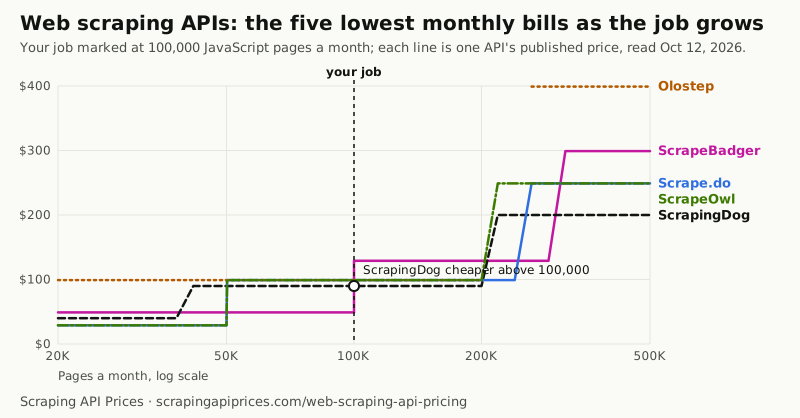
The monthly bill at every volume from 20,000 to 500,000 pages, with your job marked. ScrapeBadger is cheaper between about 42,000 and 100,000 pages; below and above that band, ScrapingDog is. A step is a plan boundary.
- ScrapeBadger
- ScrapingDog
- Scrape.do
- Olostep
- ScrapeOwl
The bills behind the curve
- ScrapeBadger: 20,000: $49.00 · 50,000: $49.00 · 100,000: $49.00 · 200,000: $129.00 · 500,000: $299.00
- ScrapingDog: 20,000: $40.00 · 50,000: $90.00 · 100,000: $90.00 · 200,000: $90.00 · 500,000: $200.00
- Scrape.do: 20,000: $29.00 · 50,000: $29.00 · 100,000: $99.00 · 200,000: $99.00 · 500,000: $249.00
- Olostep: 20,000: $99.00 · 50,000: $99.00 · 100,000: $99.00 · 200,000: $99.00 · 500,000: $399.00
- ScrapeOwl: 20,000: $29.00 · 50,000: $29.00 · 100,000: $99.00 · 200,000: $99.00 · 500,000: $249.00
All 40 web scraping APIs, priced for this job
Sorted by monthly bill; a tie goes to the plan with more room to grow. Bills that rest on an assumption, prepaid packs and published minimums follow, then every product this job cannot price, each with the reason. Protected sites are priced through the vendor's cheapest published mode for sites that block bots (premium or residential proxies, or a stealth mode). Vendors scope these modes differently, so the mode is named on each row.
| Product | Monthly bill | Plain, per 1,000 | JavaScript, per 1,000 | Protected sites, per 1,000 | Failed requests billed | Free tier | Room to grow | Checked |
|---|---|---|---|---|---|---|---|---|
| ScrapeBadgerOfficial pricing ↗ | $49.00Starter | $0.49 | $0.49 | $1.29 | no | 1,000 credits once, no card | at the limit | Oct 12, 2026 |
| ScrapingDogOfficial pricing ↗ | $90.00Standard | $0.40 | $0.90 | not published | no | 100 credits once | to 200,000 | Oct 12, 2026 |
| Scrape.doOfficial pricing ↗ | $99.00Pro | $0.29 | $0.99 | $2.49 | no | 1,000 credits, renewal not published, no card | to 250,000 | Oct 12, 2026 |
| OlostepOfficial pricing ↗ | $99.00Standard | $0.99 | $0.99 | not published | no | 500 requests once | to 200,000 | Oct 12, 2026 |
| ScrapeOwlOfficial pricing ↗ | $99.00Startup | $0.29 | $0.99 | $2.49 | no | 1,000 credits once, no card | to 200,000 | Oct 12, 2026 |
| ScrapingBeeOfficial pricing ↗ | $99.00Startup | $0.49 | $0.99 | $5.99 | no | 1,000 credits once, no card | to 200,000 | Oct 12, 2026 |
| WebScraping.AIOfficial pricing ↗ | $99.00Plus | $0.20 | $0.99 | $2.49 | no | 2,000 credits a month, no card | to 200,000 | Oct 12, 2026 |
| Decodo Web Scraping APIOfficial pricing ↗ | $99.00$99 plan | $0.49 | $0.99 | not published | no | size not published, renewal not published | to 165,000 | Oct 12, 2026 |
| ScrapeOpsOfficial pricing ↗ | $99.001,250,000 credits | $0.19 | $0.99 | not published | no | 1,000 credits once | to 125,000 | Oct 12, 2026 |
| ZenRowsOfficial pricing ↗ | $99.00Launch L2 | $0.39 | $0.99 | not published | no | 5,000 credits a month | at the limit | Oct 12, 2026 |
| ScrapingBotOfficial pricing ↗ | $99.99Startup | $0.50 | $1.00 | $6.00 | no | 100 credits once | to 220,000 | Oct 12, 2026 |
| ScrapflyOfficial pricing ↗ | $100.00Pro | $0.30 | $1.00 | not published | not published | 1,000 credits once, no card | to 158,333 | Oct 12, 2026 |
| FirecrawlOfficial pricing ↗ | $114.00Standard | $1.14 | $1.14 | not published | yes | 1,000 credits a month, no card | to 100,700 | Oct 12, 2026 |
| HasDataOfficial pricing ↗ | $119.00Basic | $0.59 | $1.19 | $2.49 | no | 1,000 credits a month, no card | at the limit | Oct 12, 2026 |
| ScraperAPIOfficial pricing ↗ | $149.00Startup | $0.49 | $1.49 | $2.99 | no | 5,000 credits for a 7-day trial, no card | at the limit | Oct 12, 2026 |
| Oxylabs Web Scraper APIOfficial pricing ↗ | $500.00Flexible | $1.00 | $5.00 | not published | no | size not published, renewal not published | to 384,000 | Oct 12, 2026 |
| BrowserCloudOfficial pricing ↗ | $19.00priced with an assumption · Hobby | $0.19 | $0.19 | not published | not published | 1,000 credits a month | to 114,000 | Oct 12, 2026 |
| NimbleOfficial pricing ↗ | $100.00priced with an assumption · pay as you go · Pay as you go | $1.00 | $1.00 | not published | no | 5,000 pages once, no card | pay as you go | Oct 12, 2026 |
| HyperbrowserOfficial pricing ↗ | $105.26priced with an assumption · Startup | $1.05 | $1.05 | not published | not published | size not published, renewal not published | at the limit | Oct 12, 2026 |
| Bright Data Web Unlocker and Web Scraper APIOfficial pricing ↗ | $142.50priced with an assumption · pay as you go · Web Unlocker Pay as you go | $1.43 | $1.43 | not published | no | 5,000 requests a month, no card | pay as you go | Oct 12, 2026 |
| WebScrapingAPIOfficial pricing ↗ | $149.00priced with an assumption · Advanced | $1.49 | $1.49 | not published | no | 5,000 requests once, no card | at the limit | Oct 12, 2026 |
| Scraping RobotOfficial pricing ↗ | $180.00priced with an assumption · pay as you go · Business pay-as-you-go | $1.80 | $1.80 | not published | no | 5,000 requests once | pay as you go | Oct 12, 2026 |
| ScrapingAntOfficial pricing ↗ | $249.00priced with an assumption · Business | $0.19 | $2.49 | not published | no | 10,000 credits a month, no card | to 300,000 | Oct 12, 2026 |
| BrowsableOfficial pricing ↗ | $249.00priced with an assumption · Business | $2.49 | $2.49 | not published | not published | 100 credits once | to 118,750 | Oct 12, 2026 |
| ScrappaOfficial pricing ↗ | $35.00one-time prepaid pack | not published | not published | not published | no | 500 credits a month, no card | to 119,000 | Oct 12, 2026 |
| ScrapingFishOfficial pricing ↗ | $202.00one-time prepaid pack | not published | not published | not published | not published | size not published, renewal not published | to 100,700 | Oct 12, 2026 |
| ScrapeLensOfficial pricing ↗ | $211.00one-time prepaid pack | not published | not published | not published | not published | 1,000 credits once | at the limit | Oct 12, 2026 |
| CrawlbaseOfficial pricing ↗ | $99.00 to $693.40set by each website's tier | $0.76 to $4.93 | $0.99 to $6.93 | $0.99 to $6.93 | no | 1,000 credits once, no card | not published | Oct 12, 2026 |
| Zyte APIOfficial pricing ↗ | $100.00 to $768.00set by each website's tier | $0.13 to $1.00 | $1.00 to $7.68 | $1.00 to $7.68 | no | $5 of usage once | not published | Oct 12, 2026 |
| A vendor sells this volume by quote, bills a unit this job does not determine, or publishes no rate for part of the job. Each row says which. | ||||||||
| ApifyOfficial pricing ↗ | No public price for this jobActor prices, RAM-hours, storage, transfer and proxy usage cannot be calculated from this page-count workload. | not published | not published | not published | not published | size not published, renewal not published | not published | Oct 9, 2026 |
| Cloudflare Browser RenderingOfficial pricing ↗ | No public price for this jobNo published price for a standard page | not published | not published | not published | not published | size not published, renewal not published | not published | Oct 12, 2026 |
| DesearchOfficial pricing ↗ | No public price for this jobDesearch publishes search and crawl rates, but no rate for JavaScript-rendered page requests. Its standard-search bill is shown on the web-search comparison. | not published | not published | not published | not published | $5 of usage once | not published | Oct 12, 2026 |
| DiffbotOfficial pricing ↗ | No public price for this jobDiffbot publishes Extract-call credit rates, but no rate for this generic JavaScript-rendered page request. Its extraction bill is shown on the AI-extraction comparison. | not published | not published | not published | not published | size not published, renewal not published | not published | Oct 12, 2026 |
| Lightpanda CloudOfficial pricing ↗ | No public price for this jobLightpanda bills browser-session hours. A JavaScript page count does not supply session duration; its browser-hour bill is shown on the cloud-browser comparison. | not published | not published | not published | not published | 10 browser hours a month, no card | not published | Oct 12, 2026 |
| ScrapeGraphAIOfficial pricing ↗ | No public price for this jobScrapeGraphAI publishes credit rates for output formats and extraction, but no rate for this generic JavaScript-rendered page request. Its extraction bill is shown on the AI-extraction comparison. | not published | not published | not published | not published | 500 credits once | not published | Oct 12, 2026 |
| ScrapeNinjaOfficial pricing ↗ | No public price for this jobJavaScript and non-JavaScript have separate allowances, and RapidAPI adds bandwidth overage. The page-count workload has no bandwidth input; one request balance would give the wrong bill. | not published | not published | not published | not published | 500 requests a month | not published | Oct 7, 2026 |
| Search1APIOfficial pricing ↗ | No public price for this jobNo published price for a standard page | not published | not published | not published | not published | size not published, renewal not published | not published | Oct 12, 2026 |
| SOAX Web Data APIOfficial pricing ↗ | No public price for this jobSOAX publishes bandwidth prices but no reachable request-priced Web Data API table. A page count does not supply traffic in GB, so the public terms do not establish this bill. | not published | not published | not published | not published | not published | not published | Sep 2, 2026 |
| Spider.cloudOfficial pricing ↗ | No public price for this jobSpider bills by GB transferred and CPU time, which a page count doesn't tell us, and its Unlimited plan sells concurrency without saying how long a request takes, so we can't price this job. | not published | not published | not published | not published | size not published, renewal not published | not published | Oct 12, 2026 |
| ThunderbitOfficial pricing ↗ | No public price for this jobThe Open API sells its page units by the year, all upfront, and the extension's credits count output rows, so a monthly bill for a page job cannot be calculated from these plans. | not published | not published | not published | no | 6 pages a month | not published | Oct 11, 2026 |
Leaving one of these APIs? Its alternatives page, listed on the compare page, names who is cheaper for the same job and what a switch gives up; the head-to-head pages set two side by side.
What a web scraping API is
A web scraping API accepts a URL and returns the received page, rendered page, or extracted response without requiring the buyer to operate the proxy and browser layer directly. The defining job is retrieval from a URL. Some products add rendering, residential routing, screenshots, or structured extraction, but those are modifiers to the retrieval job rather than proof that every row returns the same output. ScraperAPI documents URL-based requests and separate credit costs for rendering and target-specific modes, while Zyte API separates HTTP and browser-rendered retrieval and optional extraction. (ScraperAPI credit documentation, checked Jul 26, 2026; Zyte API pricing, checked Jul 26, 2026.)
A cloud browser is the neighbouring category most often confused with a scraping API. A scraping API is a request-and-response abstraction: send the target and options, then receive a result. A cloud browser exposes a browser session that the buyer’s code or agent controls over time. Browserbase publishes browser-hour, proxy, Search, Fetch, and Extract meters, while ScraperAPI publishes request-credit rules. That difference changes both architecture and budgeting. Choose a cloud browser when the workflow must preserve session state or execute a sequence of interactions. Choose a scraping API when the primary unit is an independently retrievable URL. (Browserbase pricing, checked Jul 25, 2026; ScraperAPI pricing, checked Jul 26, 2026.)
A SERP API is narrower than a general scraping API because its contract begins with a search query and returns search-engine data. A web search API also begins with a query, but is usually designed for discovery or grounding rather than faithful capture of a named search-engine results page. AI extraction is downstream transformation: it converts a received page or browser state into a requested schema, answer, or agent-ready representation. Products can span these categories, which is why the same product can legitimately appear on more than one comparison page. (SerpApi pricing, checked Jul 26, 2026; Brave Search API, checked Jul 26, 2026; Firecrawl extraction guide, checked Jul 26, 2026.)
What this category bills on
The most direct meter is a request or a successful result. Credit-based products translate the request into credits, then apply different credit weights for JavaScript rendering, premium proxies, protected targets, screenshots, or other modes. Result-based products may bill only when they return a qualifying result, while request-based products can define chargeable status codes or cancellation rules differently. The buyer therefore needs both the plan allowance and the exact multiplier for the intended target and options. (ScraperAPI credit documentation, checked Jul 26, 2026; Oxylabs pricing, checked Oct 9, 2026; ScrapingBee FAQ, checked Jul 26, 2026.)
Not every product in this category exposes a page-request billing unit. Apify meters platform compute, storage, transfer, proxy use, and Actor-specific events. Cloudflare Browser Rendering and Lightpanda expose browser-time meters. Spider.cloud combines compute or concurrency with bandwidth. Those products remain part of the scraping market because they can perform the retrieval job, but their public meters cannot be converted into the table’s page workload without inventing session duration, memory, bandwidth, or concurrency assumptions. (Apify pricing, checked Jul 26, 2026; Cloudflare Browser Rendering pricing, checked Jul 25, 2026; Lightpanda pricing, checked Jul 25, 2026; Spider.cloud pricing, checked Jul 26, 2026.)
The comparison workload
The table uses one JavaScript-rendered page request as the unit and shows every product carrying scraping-api in the dataset. It does not silently add a premium proxy, residential route, target-domain surcharge, screenshot, AI extraction step, browser duration, or guessed retry rate. An assumption marker means a required modifier is not explicit in the product record and is provisionally treated as included. A not-computable or quote-required row is retained because an unpublished or incompatible meter is market information, not a reason to omit the product. (Scraping API Prices methodology, checked Jul 26, 2026.)
Rows are ordered by evidence state before bill size: assumption-free calculations, assumption-dependent calculations, published lower bounds, quote-required rows, and rows whose public meter does not fit the workload. Affiliate data does not affect inclusion or order. An assumption-marked row is a question to resolve with the vendor, not evidence for a cheapest claim. (Scraping API Prices methodology, checked Jul 26, 2026.)
What can change the bill
Target, rendering mode, proxy route, and output type can change the number of credits or the applicable meter. Pagination and detail-page enrichment create additional retrievals. Media transfer, storage, browser time, compute, and extraction tokens can be separate charges on hybrid products. Concurrency is usually a capacity limit rather than a usage billing unit, so a plan can fit the request count while failing the required completion window. (ScraperAPI credit documentation, checked Jul 26, 2026; Apify pricing, checked Jul 26, 2026; Browserbase pricing, checked Jul 25, 2026.)
How these charges fit the workload
- Oxylabs Web Scraper API publishes a JavaScript custom-domain rate that maps to the kept pages in this workload ($1.50 per 1,000 on its $30 Starter, $1.40 on Basic, $1.30 on Flexible). Its subscriptions now cover every Oxylabs product, and the market table prices each as a balance capped at the results the page states. The smallest tier whose stated capacity covers the volume is $30 Starter at 10,000 JavaScript pages, $500 Flexible at 100,000, and an Enterprise plan from $2,500 at 1,000,000. Checked Oct 9, 2026.
- Crawlbase bills successful requests from a graduated pay-as-you-go card or from monthly credit blocks. JavaScript rendering doubles a request, and each website’s difficulty tier multiplies it from ×1 to ×20, so the table gives its bill as a range across the eight tiers, from the easiest sites to the hardest. Checked Oct 11, 2026.
- Zyte API puts each website in one of five difficulty tiers, with separate prices for HTTP and browser-rendered requests and optional monthly commitments, so the table gives its bill as a range across the five tiers. Failed responses are free. Checked Oct 11, 2026.
- Apify runs scraping jobs as Actors and meters platform resources rather than publishing a generic rendered-page billing unit. The pricing page is the route to the entry tier or a custom platform contract. Checked Jul 26, 2026.
- Cloudflare Browser Rendering exposes browser automation through Workers and bills browser usage rather than a generic page request. Its public documentation is the purchase path; no separate enterprise browser offer is published there. Checked Jul 25, 2026.
- Diffbot publishes a credit mapping for its Extract operation. The table can now price that operation when it matches the selected workload; crawling, natural-language processing and Knowledge Graph operations retain their separate meters. Checked Oct 5, 2026.
- Lightpanda Cloud provides hosted browser execution with browser-time allowances and a bring-your-own-proxy model. Its pricing page is the route to the entry tier or a custom deployment and volume agreement. Checked Jul 25, 2026.
- ScrapeGraphAI combines scraping formats, structured extraction, search, crawling, monitoring, and optional stealth under shared credits. Its product page is the route to the entry tier or custom credits and limits. Checked Jul 26, 2026.
- SOAX Web Data API offers request allowances with rendering, proxy routing, and anti-bot handling presented as included, but the stored request meter has no billing unit suitable for this calculation. Its pricing page routes buyers to custom request volume and terms. Checked Jul 26, 2026.
- Spider.cloud provides crawling and browser-capable retrieval through bandwidth-and-compute or concurrency-based offers. Its pricing page is the route to a public plan or custom arrangement, but neither model converts to a page bill without workload assumptions. Checked Jul 26, 2026.
How to use the comparison
Start with the row whose meter matches the intended job, then verify the target, rendering, routing, output, failure-billing rule, concurrency, and contract term in writing. Recalculate whenever one of those inputs changes. Treat not-computable as a procurement question and quote-required as a contract path. Neither state means free, unavailable, or outside the market. (Scraping API Prices methodology, checked Jul 26, 2026; ScraperAPI credit documentation, checked Jul 26, 2026.)